
Last reviewed: 26/11/2026 by SDA Homes WA Team.
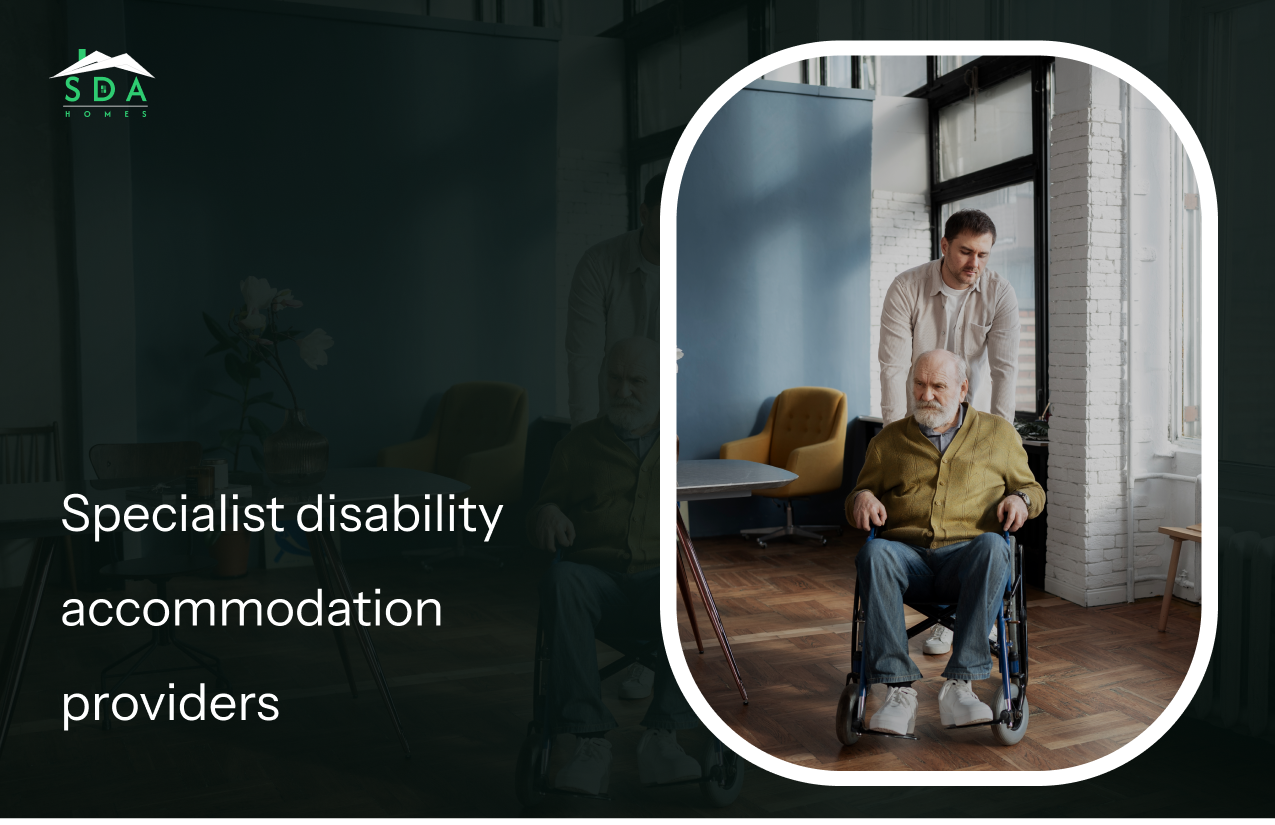
A specialist disability accommodation (SDA) provider registers with the NDIS Quality and Safeguards Commission to offer SDA, and applies to enrol homes with the NDIS. Once approved, a home becomes an SDA dwelling. In Perth, you can compare providers by their homes, design categories, suburbs and how clearly they explain rent, bills and support arrangements. SDA Homes WA is based in Maddington.
What is specialist disability accommodation?
Specialist disability accommodation (SDA) is a range of housing for people with extreme functional impairment or very high support needs. It may suit a person when other home and living supports do not meet their disability needs. Other criteria also apply, so check your NDIS plan.
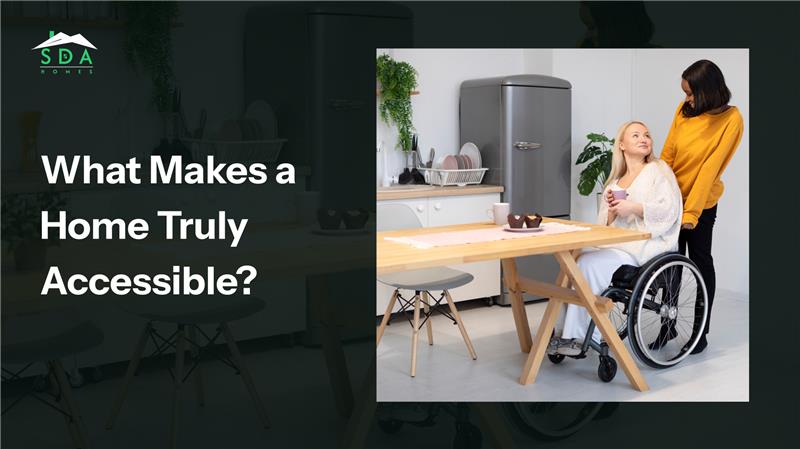
SDA homes can include features such as wide doorways, wheelchair-accessible kitchen sinks, ceiling hoists and button-operated doors. The features in each home depend on its design, so do not assume that one SDA home has the same features as another. Our specialist disability accommodation guide explains the basics in more detail.
What does an SDA provider do?
An SDA provider supplies the home. The provider must register with the NDIS Quality and Safeguards Commission and must apply to enrol each home. If you have SDA funding, your plan needs to record your chosen SDA provider, and you need a written service agreement for your SDA supports.
An SDA provider’s role is about the dwelling. The NDIS says SDA does not include NDIS supports or services that you receive in your home. This means SDA funding does not pay for:
- personal care
- supported independent living (SIL)
- individualised living options
- assistive technology
If you need any of these supports, talk to your support coordinator about them and check your plan.
SDA provider or SIL provider: what is the difference?
Many people hear SDA and SIL together and assume they are one service. They are separate NDIS supports. In simple terms, SDA funding goes to the SDA provider for the home, SIL funding pays for support workers, and you pay your rent contribution and day-to-day costs.
| Question | SDA | SIL |
|---|---|---|
| What is it? | The specialist home itself | Funding for a support worker, shared or individual, to help or supervise you 24 hours a day, 7 days a week |
| Does it cover personal care and daily tasks? | No | Yes. This can include showering, dressing, cooking and cleaning |
| Does it cover rent and groceries? | No, you pay a reasonable rent contribution and your day-to-day costs | No |
| Who delivers it? | A registered SDA provider | A SIL provider that meets the registration requirement |
The NDIS says only providers that have registered, or that applied to register before 01/10/2026, can deliver SIL supports. It also says you do not need to change anything if you organise or employ your own support workers. Some participants have both SDA and SIL, while others do not. Ask each provider which service they are offering you, and get it in writing.
What types of SDA homes can a provider offer?
SDA can be a house, apartment, villa, duplex or townhouse. Many participants live in a home with a small number of other people and have their own private bedroom. Some people choose to share a bedroom, and some may be able to live alone if that is the best option for their needs.
The SDA Rules use specific meanings for some building types. A group home is a house with four or five long-term residents. A villa, duplex or townhouse has three or fewer residents. The number of residents in a dwelling must not exceed its enrolled number. If you are weighing up your options, read our comparison of shared and individual SDA housing in Perth.
Which SDA design categories should you know?
Design categories describe the features a home is built with. An eligible participant can receive one of four.
Improved Liveability
Housing with better physical access and more features for people with sensory, intellectual or cognitive impairments. For example, walls and floors may be very easy to see, and living areas may be laid out so support workers can see you.
Fully Accessible
Housing with a high level of physical access features for people with many physical challenges, such as someone who needs to use a wheelchair at home.
Robust
Housing built to be safe for you and others. It is very strong and durable, which reduces the need for repairs and maintenance. It may suit people who need help managing complex and challenging behaviours.
High Physical Support
Housing with a high level of physical access for people who need very high levels of support. It may include ceiling hoists, a backup power supply, or home automation and communication technology.
The SDA Rules also define a Basic category, but the NDIS does not assign it to eligible participants. A good provider should be able to tell you the enrolled design category of every home it shows you.
Who can get SDA funding?
The NDIS decides whether you are eligible for SDA and whether it can fund it. Under the SDA Rules, eligibility involves having an extreme functional impairment or very high support needs, and also meeting the SDA needs requirement. Broadly, SDA together with your other supports needs to help you more, and be better value for money, than other supports on their own. The NDIS also looks at whether SDA meets its funding criteria. Check your NDIS plan.
A provider cannot decide your eligibility. Our NDIS SDA eligibility assessment checklist and our guide to the NDIS SDA rules can help you prepare questions for your support coordinator.
How to choose an SDA provider, step by step
1. Check your plan first
Look for SDA funding and note the design category, building type and any other details listed. This tells you which homes are worth viewing. If your plan does not include SDA, speak with your support coordinator before you commit to anything.
2. Check the provider’s registration
Use Find a registered provider on the NDIS Quality and Safeguards Commission website. Search the provider’s business name or ask for their registration details, and check that what you find matches what they have told you.
3. Confirm the home is enrolled
Ask for the home’s SDA design category, building type, number of residents and enrolment details. Compare these with your plan. A home that looks accessible does not always have enrolment in the category you need.
4. Visit the home
Visit in person if you can, and take someone you trust. Try the entry, bathroom, kitchen and bedroom the way you would use them every day. Think about space for your equipment, room for support workers and how you would get out in an emergency.
5. Look at the location
Think about how close the home is to family, friends, health services, transport and the places you go each week. Visit at different times of day if possible.
6. Ask for costs in writing
Ask what your rent contribution will be and which bills you will pay. The rent contribution must not exceed the maximum reasonable rent contribution in the NDIS SDA pricing arrangements.
7. Read the service agreement
Ask for the written service agreement and take time to read it. Ask the provider to explain anything that is unclear, and get independent advice before you sign if you need it.
Questions to ask an SDA provider before you sign
About the home
- Which design category is this home, and does it match my plan?
- Which accessibility features does it have, and can more be added?
- Will I have a private bedroom?
- Who else lives here, and who chooses new housemates?
- Is there space for a support worker overnight if I need it?
Money and agreements
- What is included in the rent contribution?
- Which bills do I pay, and how do residents split shared bills?
- How and when can costs change?
- What notice is needed if I want to move out?
- Under what circumstances could you ask me to leave?
Day-to-day living
- How do I report repairs, and how quickly do you handle urgent repairs?
- Who provides in-home support, and can I choose my own provider?
- Can family and friends visit when I want them to?
- How do you handle disagreements between housemates?
- How do I make a complaint?
Signs you should slow down and ask more
These are practical warning signs to talk through with your support coordinator or a person you trust:
- Someone pushes you to sign before you have visited or read the agreement.
- The provider cannot show registration or enrolment details.
- The provider explains costs only verbally.
- Someone tells you that you must use one particular support provider to get the home. Under the SDA Rules, an SDA provider must not stop other NDIS providers from entering an enrolled home to support a resident, so ask your support coordinator about this.
- Someone promises that the NDIS will approve your funding.
How can you find SDA vacancies in Perth?
If you have SDA funding, you can use the NDIS SDA finder, which searches by location, building type and maximum price per year. A support coordinator or recovery coach can also refer you. Friends, family, online searches and the NDIS Quality and Safeguards Commission are other places to look.
You can also browse our SDA properties in Perth. Availability changes, so contact the provider to confirm that a home is still vacant before you make plans.
What if something goes wrong?
Start by asking your provider for its complaints process, ideally before you move in. Keep notes of dates, conversations and any written replies. To contact SDA Homes WA about a concern, see our SDA complaints and feedback page. You can also make a complaint to the NDIS Quality and Safeguards Commission.
About SDA Homes WA
SDA Homes WA is based at 71 Mannikin Way, Maddington WA 6109. Call 0456 251 522 or email info@sdahomeswa.com.au. You can also contact SDA Homes WA online to ask about a home or arrange a conversation about your needs.
Frequently asked questions
Is an SDA provider the same as a support provider?
The roles are different. An SDA provider supplies the home. Support in your home, such as SIL, is a separate NDIS support. Check which services each provider is offering you.
How do I check an SDA provider is registered?
Use Find a registered provider on the NDIS Quality and Safeguards Commission website, and ask the provider for their registration and home enrolment details.
Can I choose a different support provider from my SDA provider?
SDA and in-home supports are separate NDIS supports. Under the SDA Rules, an SDA provider must not stop other NDIS providers from entering an enrolled home to support a resident. Your options may still depend on your plan and any shared support arrangements in the home, so check with your support coordinator before you sign.
Do I pay rent in an SDA home?
Yes. You pay a reasonable rent contribution and day-to-day costs. The rent contribution must not exceed the maximum reasonable rent contribution.
Can I live alone in SDA?
Some participants may be able to live alone if that is the best option for their needs. It depends on your plan and the NDIS funding criteria.
Can an SDA provider guarantee my funding?
No. The NDIS decides whether it can fund SDA. A provider can explain its homes, but it cannot approve your funding.
Sources: NDIS, What is specialist disability accommodation (SDA), current as of 01/07/2026, and What is supported independent living (SIL), current as of 01/10/2026 (ndis.gov.au); National Disability Insurance Scheme (Specialist Disability Accommodation) Rules 2020, compilation of 04/03/2025 (legislation.gov.au/F2020L00769). Check the latest NDIS information and your own plan.

 By